
 Helpful tips
The new coronavirus continues to spread, and people continue to ask questions and try to be careful, clean and disinfect homes and things in them.
The Centers for Disease Control and Prevention (CDC) states that COVID-19 is more often and faster transmitted by airborne droplets (from an infected person sneezing or coughing) than through objects and materials touched by the patient.
At the same time, specialists from the same center also note that the virus can remain viable for several hours or even days on surfaces made from various materials, including clothes.
Although scientists have studied how long the novel coronavirus can survive on cardboard, plastic and steel, the question of the virus on tissue is still open.
The material has an informational and reference function! Before using any products or services, you should consult a specialist!
Can the virus stay on clothes?
Infectious Disease Specialist Amesh A. Amesh A. Adalja of the Johns Hopkins Health Safety Center in Maryland believes that the virus can remain viable in clothing for hours, maybe days.
This largely depends on environmental conditions. For example, temperature and humidity influence the spread of the virus.
At the same time, he does not believe that clothing can play the role of the “main means of spreading” the new coronavirus.
But it's best to be careful. What can you do to reduce the risk of coronavirus exposure to clothing?
Read also: 30 things you must wash or clean in the next 30 days
How often should you wash your clothes?
If no one in your family has tested positive for the new coronavirus and no one has any symptoms, you can clean and wash your clothes as usual.
But if you have been to a store or other public places, especially if people around you did not follow strict rules (keep a distance, for example), it is best to wash your clothes in a typewriter after returning home.
Research from the National Institute of Allergy and Infectious Diseases suggests that some viruses can remain active for two or three days on plastic and stainless steel, as well as 24 hours on cardboard and four hours on copper.
Zippers on clothes, buttons and other details on clothes can be made from these materials and can therefore bring the virus into your home.
Read also: 4 types of household products that kill coronavirus
What if the clothes were worn by a sick person?
If anyone in your family has contracted COVID-19 or is suspected of being infected, extra precautions should be taken when washing their clothes, towels and bedding clothes they came into contact with.
Specialists from the Center for Disease Control and Prevention recommend:
Wear disposable gloves when handling dirty laundry from a sick person. Immediately after use, gloves should be discarded.
Wash your hands as soon as you take off your gloves.
Do not shake dirty laundry, otherwise you may spread the virus through the air.
How to wash clothes
– Wash clothes according to the instructions on the labels, and always with warm water.
– It is possible to wash other family members' clothes, as laundry detergents kill the virus.
Laundry baskets should be cleaned and disinfected after contact with the patient's belongings.
Additionally, you can wipe metal and plastic parts on clothes with alcohol or hydrogen peroxide. It will also be very useful for you to learn how hydrogen peroxide, being an excellent home antiseptic, fights against viruses.
If a particular item absolutely cannot be heat treated, let alone washed, then they can be folded into a plastic bag, which should then be properly closed and left on two to three weeks is enough time for the virus to die.
For example, you can treat your shoes this way.
Can I wash by hand?
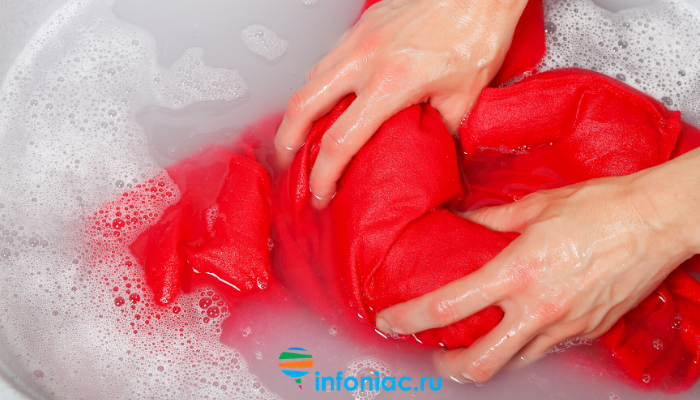
There are no specific guidelines that would prohibit hand-washing your clothes. However, when using a washing machine, the temperature should be much higher than usual — this is one of the recommendations of the Centers for Disease Control and Prevention regarding washing in a washing machine.