
 Incredible facts
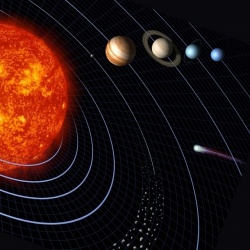
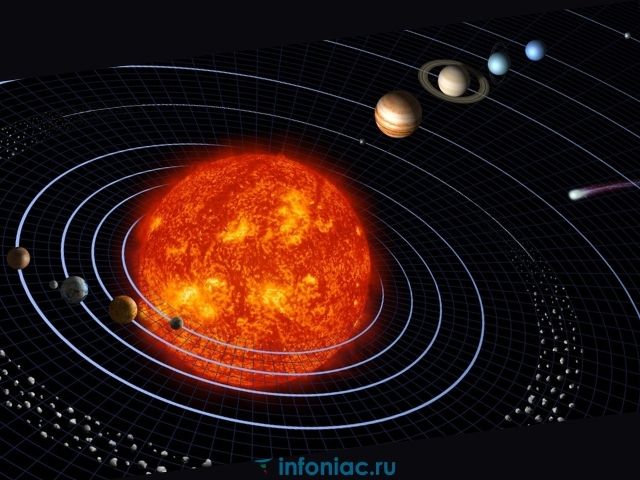
In November, all those who like to watch the night sky will be able to see a rare phenomenon – all seven planets in the solar system will be visible to the naked eye.
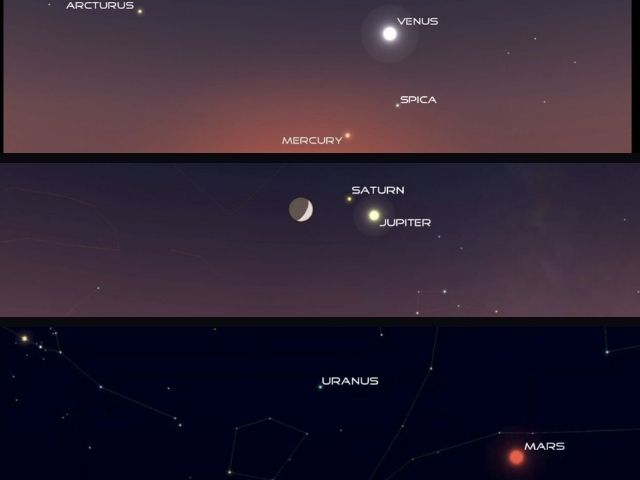
Venus will be the brightest, but you'll also be able to see Mercury, Mars, Saturn, and Jupiter.
Stock up on binoculars to view Uranus and Neptune.
Read also: 2020 astrological forecast: planetary hints, tips and important events
Mars, Saturn, and Jupiter are best seen in the evening, and the best time to observe Venus is in the morning.
© pixabay
Mercury
Anyone living in the northern hemisphere will be able to see Mercury in the morning during the first weeks of November.
The planet will reach its maximum morning elongation on November 10, when it is 19 degrees west of the Sun.
Elongation is the angle between the Sun and the planet from the point of view of a person standing on Earth. For example, imagine looking at the sky, seeing the Sun and seeing a bright planet a little bit on the left. If you were to draw a triangle that connects you, the Sun and the planet and measured the angle of the triangle where you are, that would be elongation.
Venus
Venus will be the brightest planet in the night sky.
It has already reached its highest elongation on August 12-13. However, the planet remains bright and visible to the naked eye until the end of this year. A lot depends on where you live.
In mid-northern latitudes, Venus will be visible three hours in early November, and 2.5 hours before sunrise by the end of the month.
Those who live closer to the equator at the beginning of the month will be able to watch it 2 hours, and at the end 1.55 minutes before sunrise.
Venus will appear in the southern hemisphere 1.5 hours before sunrise throughout the month.
Although Venus will be almost twice as bright as July by mid-November, its apparent magnitude will be -3.9, which is much brighter than other planets.
You will be able to see Venus as a “star” close to Mercury.
Watch the moon waning in the morning sky, accompanied by Venus and Mercury on November 12-13.
© youtube
Mars
Mars came into the spotlight back in October. It was brighter than ever, and the next time we'll be able to see this phenomenon is only in September 2035.
It reached an opposition point in the sky, that is, it was at a point opposite to the Sun from the point of view of an observer on Earth.
Because Earth's orbit is smaller than that of Mars, we're now moving away from the planet, and it's slowly dimming in the night sky.
If you look at the sky right now and see a bright red “star”, it's likely to be Mars.
Jupiter and Saturn
In November, you'll be able to see Jupiter and Saturn as soon as the Sun goes down. It will be possible to watch them until the end of the year.
In the mid-northern latitudes, Jupiter and Saturn enter in the middle of the evening, but stay in the southern hemisphere until late at night.
In December 2020, the Great Connection of these planets will take place. This event takes place every 20 years. This year, the rapprochement will be the highest since 1623.
Both Jupiter and Saturn will be very bright throughout November. They'll drop slightly lower as the sun sets. If you have a telescope, you can observe these planets to get a clearer picture of them.
Jupiter is much brighter than Satur, so look for it first and then use it as a reference point to discover Saturn. To see the rings and moons of these planets, you'll have to arm yourself with a telescope.
© Getty Images
Uranus and Neptune
Both of these planets will be visible in the evening of November, but it will be difficult to see them clearly without additional help.
You'll need binoculars to see Uranus and a good telescope or long-vision binoculars to observe Neptune.
Uranus appears blue-green and is slightly larger and brighter in the late evening in early November.
As the sky gets darker with the moon waning, it will be easier for you to see Neptune as well.
To know which direction to look in, you can download an app with a night sky map that will help you determine the position of stars and planets depending on your location.
Get ready for a great show!