 Events
Comet ISON, which is approaching us, which has every chance of becoming the “comet of the century”, can cause an unusual type of meteor shower, scientists say.
When the comet passes close to Earth, it is possible that the dust that the comet's tail sheds could form a strange meteor shower if our planet passes near the stream tiny particles.
Instead of lighting up with shooting stars, particles can slowly move through the air and sink to the Earth's surface, experts say.
The dust particles travel at about 200,000 kilometers per hour, but as soon as they hit the Earth's atmosphere, they will slow down and stop, computer models show.
Because of this, observers from Earth will probably not be able to see meteors burning in the atmosphere. An invisible meteor shower of comet dust particles will be very slow. It may take months, maybe years, for fine particles to escape from the upper atmosphere.
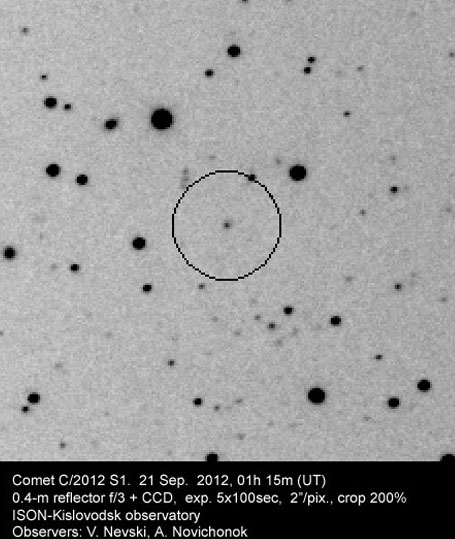
Comet ISON on discovery night
Of course, everyone hopes that the colorful spectacle of a meteor shower will still take place. Comet ISON dust can lead to “silvery clouds” — icy, glow-in-the-dark clouds above the Earth's poles that glow in blue.
The bright blue wavy clouds near the planet's poles may be the only visible signs that the comet did cause a meteor shower.
NASA's Swift orbital observatory captured the comet in January this year when a ball of dust and ice ejected more than 50,000 kilograms of dust per minute into outer space as it flew near Jupiter.
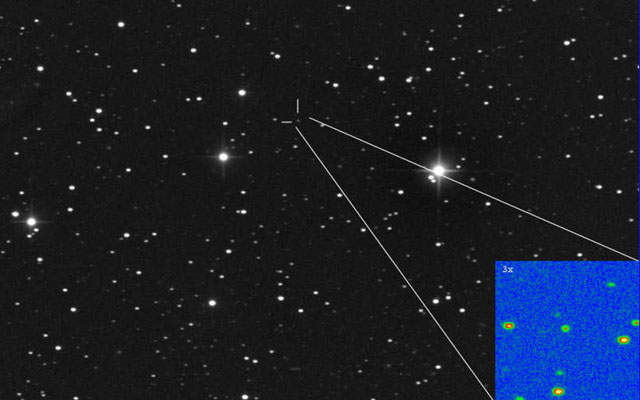
A faint spot merging with millions of other spots in the night sky could be the brightest comet of the century
It is also possible that the comet will exhaust all its strength before it can be seen from Earth, that is, it will burn under the scorching rays of the Sun as it approaches it. However, there is also a chance that the comet will burst very brightly as it approaches Earth.
It is very difficult to predict exactly how a comet will behave. Astronomers believe that Comet ISON first flew into the inner solar system from the Oort Cloud, an area outside our system.
Comet ISON's official name is C/2012 S1. It was discovered in
September 2012 by amateur astronomers Artem Novichok and Vitaly Nevsky in Russia.
Comet ISON (video):
The brightest comets:
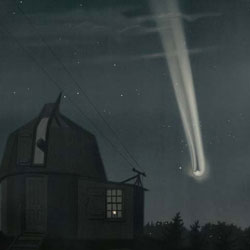
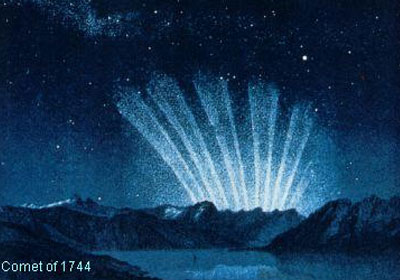
1) Comet Shezo (C/1743 X1). This comet was observed by the inhabitants of the Earth in 1743 and 1744 for several months with the naked eye. It eclipsed the star Sirius and Venus in brightness and boasted an unusual tail resembling a fan.
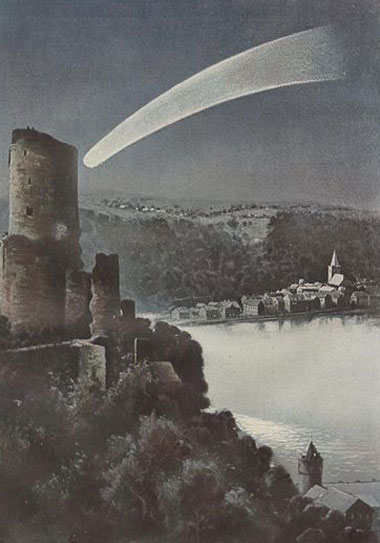
2) The Great Comet of 1811 (C/1811 F1). This comet could be observed by the inhabitants of our planet for 290 days with the naked eye. The comet was brightest in October 1811, and a little later its tail curved more than 60 degrees, which was very spectacular. The comet was as bright as the brightest stars.
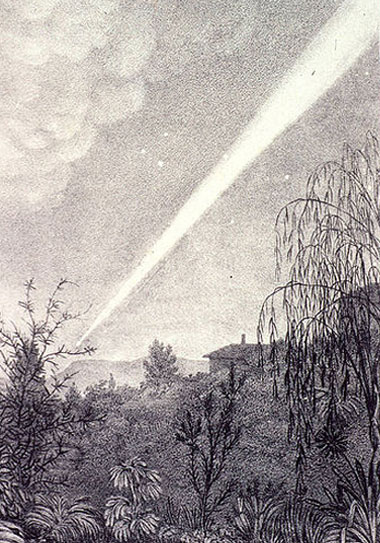
3) The Great March Comet of 1843 (C/1843 D1). This comet had the longest tail, with a length of 2 astronomical units (twice the average distance from Earth to the Sun). Earth-observers could see the comet even in daylight.
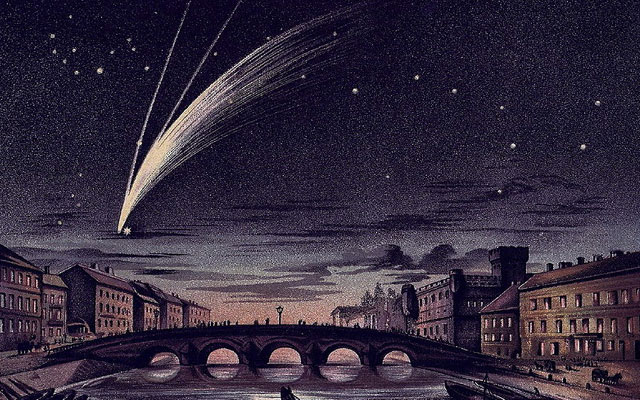
4) Comet Donati (C/1858 L1, 1858 VI). This bright comet was the first comet to be photographed. It is expected to return in the 39th century.
5) The Great September Comet of 1882 (C/1882 R1). The brightest comet of the 19th century and one of the brightest comets of the millennium. For some time, this comet could be seen by the naked eye in daylight.
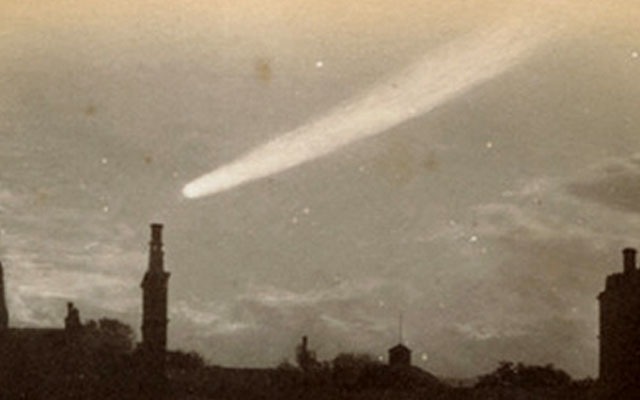
6) The Great January Comet of 1910 (C/1910 A1). This comet was visible during the daytime for two days in January 1910, so it was also called the Daytime Comet.
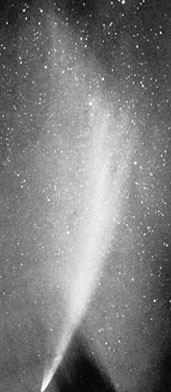
7) Comet Ikeya-Seki (C/1965 S1) is the brightest comet of the 20th century and was 60 times brighter than the full Moon! As it approached the Sun, it split into three parts. There is an assumption that this comet is part of one large comet that broke up in 1106.
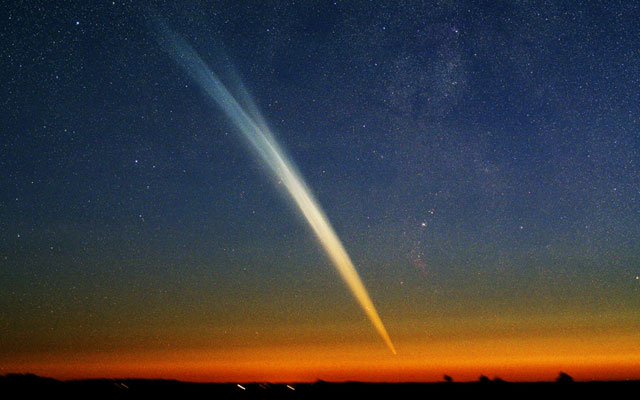
8) Comet Hyakutake (C/1996 B2). Over the past 200 years, this comet has come closest to our planet. It glowed brightly in the night sky and could be seen with the naked eye.
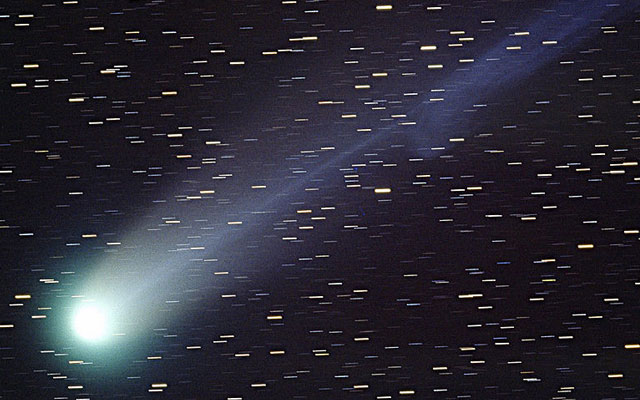
9) Hale-Bopp Comet (C/1995 O1). This comet has been visible to the naked eye for quite some time — about 1.5 years. It is called the “Great Comet of 1997" because it was the brightest year for an Earth observer. The comet caused a lot of excitement in the world, ridiculous rumors and speculations about aliens began to appear, and some cult fanatics committed suicide.
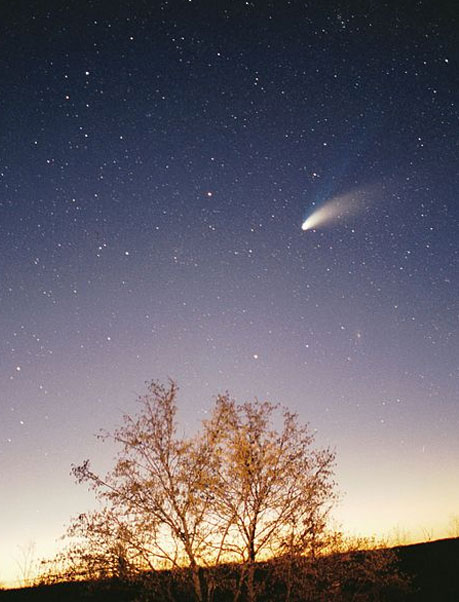
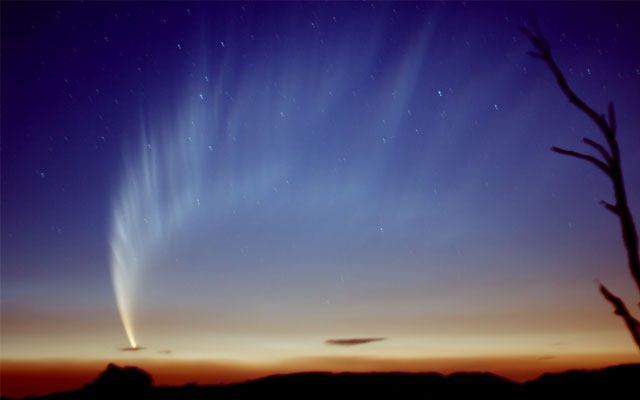
10) Comet McNaught (C/2006 P1). It was the brightest comet since 1965, and was especially well observed by residents of the Southern Hemisphere. For several days, the comet was visible even during the day. After the comet passed by the Sun, it developed a huge fan-shaped tail