
 Ecology
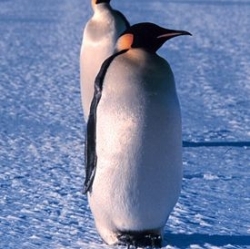
There are far more emperor penguins in Antarctica than scientists previously thought. Thanks to satellite images, seven new settlements of this bird species have been discovered in the coldest part of the globe. Thus, scientists are given the opportunity to count them even from space.
Using high-resolution satellite images, the researchers traced and analyzed 44 emperor penguin settlements along the entire Antarctic coast. Thanks to these photographs, scientists estimated that the total number of birds reaches 595,000 individuals, which is almost twice the number previously thought to be reliable (from 270,000 to 350,000).
The data obtained were especially encouraging against the background of emerging statements by scientists about changes in ice levels on the coldest continent in the world. In this situation, this poses a threat to a whole species of these unusual and amazing birds. Peter Fretwell, who heads the study at the British Science Center, said that everyone, without exception, was delighted with such a successful discovery, and this kind of “population census” made it possible to determine as accurately as possible the number of penguins living on the Antarctic coast.
Scientists can now not only count the penguins that live on our planet, but also track their behavior with climate change on Earth. The method used by scientists makes it possible to detect birds among ice. Emperor penguins breed at great speed even in the most unfavorable climatic conditions and even in places where the air temperature drops below -50. Of course, in such harsh weather conditions, the study of birds is especially difficult. And in this regard, satellite images are just a godsend for scientists.
Thanks to such photos, bird settlements have been discovered even in the most inaccessible places in Antarctica, where a person is unlikely to step. The results of the research have been published in a number of scientific publications. A special method makes it possible to increase the resolution of satellite images. This helps to study in detail the birds, baby emperor penguins, and even their shadows. It is noteworthy that thanks to satellite photographs, the total number of birds was counted quite quickly, previously it took much longer to count.
Professor Fretwell believes that this method can also be used to track other fauna, such as flamingos or deer. It was not so easy to track other types of penguins, as it is the imperial species that contrasts most favorably with white snow and ice. And this greatly simplifies the achievement of the goal of obtaining contrasting and as clear images from space as possible.
Michelle LaRue, a scientist from Minnesota, noted the great importance of this study. He said that this method is most effective for observing rare animal species that live in the most inaccessible places on our planet, which in turn is of great value for studying certain processes taking place in the animal kingdom. This will help international organizations conserve some endangered species of fauna.
It is worth noting that some scientists are sounding the alarm and are seriously concerned that the number of emperor penguins may soon decline. And the reason for this, according to them, is climate change on our planet. However, researchers hope that warming will not affect the entire coast of Antarctica, and most of the emperor penguins will still be able to survive. Today, scientists are working hard to study the “whitest” and most mysterious territory on planet Earth.