
 tardigrades Incredible facts
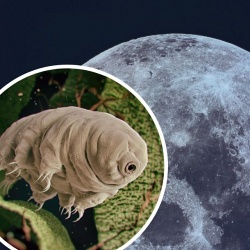
Most likely, new inhabitants have appeared on the Moon – tardigrades, the hardiest animals on Earth.
In April 2019, Israel's Bereshit spacecraft, carrying thousands of dehydrated tardigrades along with human DNA samples and other cargo, crashed on the moon.
The project organizers are convinced that organisms may be the only ones that survived the mission.
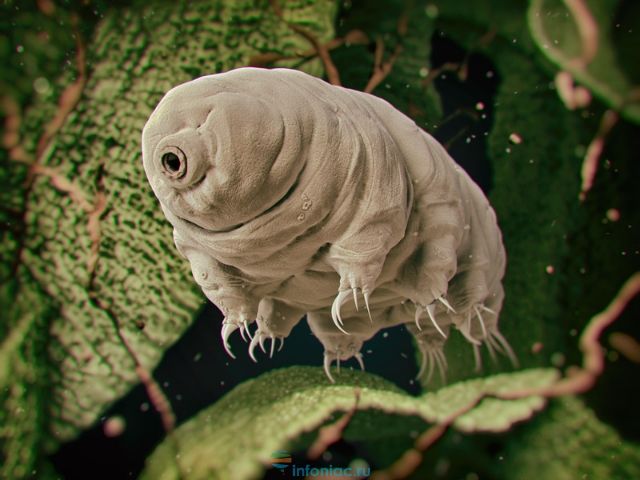
Tardigrades, known as “water bears,” are microscopic creatures that can survive in almost any environment. It is known that scientists have been able to bring tardigrades back to life after 30 years of deep freezing. Being extremophiles, tardigrades shut off their metabolism and survive in harsh conditions for long periods.
Read also: The most resilient creature that can survive in outer space
Many people wonder if tardigrades can survive on the moon.
According to expert Lukasz Kaczmarek from Adam Mickiewicz University in Poznan, Poland, the animals could well have survived the emergency landing.
© 3Dstock/Shutterstock
“Tardigrades can withstand pressure comparable to what occurs when an asteroid falls to Earth, so a small emergency landing like the one that happened is nothing for them,” explained him. He added that these creatures are theoretically able to live on the moon for years.
Dehydrated tardigrades were revived after years spent in an inactive state. After recovery, the animals became active again and were able to eat and reproduce normally.
However, it is very unlikely that the same thing will happen in space. They will not be able to colonize the Moon because it has no atmosphere and no liquid water. But it is possible to bring them back to Earth and resurrect them with water.
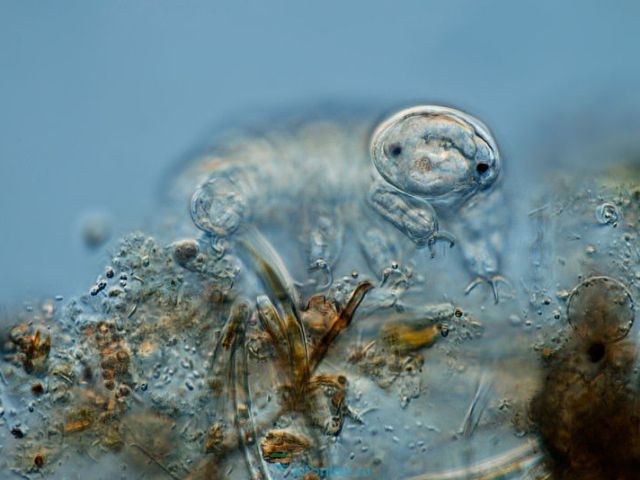
Tardigrade creature
© Wikimedia
What are tardigrades? Here are some interesting facts about the hardiest creatures on our planet.
1. Tardigrades were first discovered in 1773 by a German pastor named Johann August Goetze. In 1776, thanks to Italian biologist Lazzaro Spallanzani, the animal was named “tardigrada” (Tardigrada in Latin), which means “slow walking”.
2. Since 1778, more than 1,150 species of tardigrades have been discovered.
3. Scientists classify these animals as extremophiles, as they are able to survive in the most extreme conditions. Even a small part of these conditions are considered unfavorable and fatal for humans.
4. Tardigrade cubs are born with a full set of adult cells. They don't grow by cell division. Their cells are simply growing in size.
5. Tardigrades have been around for a very long time. They actually survived dinosaurs. These creatures have been on Earth for about 530 million years.
6. Most tardigrades are oviparous, in simple terms, females lay eggs inside the shed membrane on which the male lays sperm. Only a few known species of tardigrades are not oviparous, and females of these species can breed without fertilization.
The size of the tardigrades
© Wikipedia
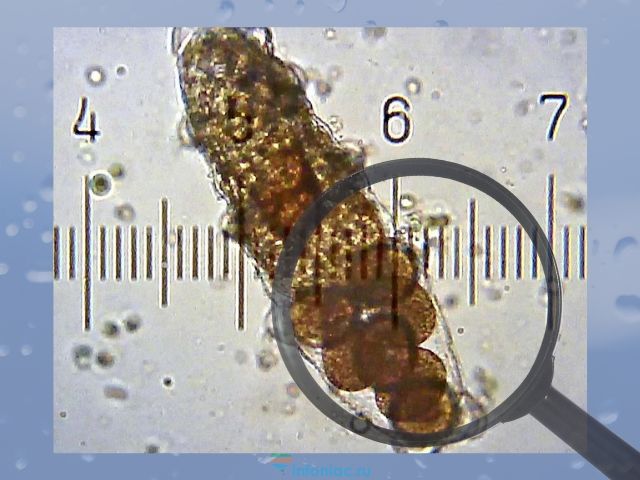
7. Tardigrades are tiny microscopic animals with segmented bodies. They reach about 0.5 to 1 mm in length.
They have 4 pairs of legs, each with 4-8 claws that resemble bear claws. For this reason, they are often referred to as “water bears” as well as “moss piglets”, as they are often found in moss.
Where does the tardigrade live
8. These creatures living in water live all over the world in the most extreme places, such as Antarctic ice, in the ocean at a depth of 4,000 meters, high in the Himalayas at an altitude of 6,000 meters, on trunks trees, moss, soil, beach and any other humid environment.
What does a tardigrade eat
9. Most often, tardigrades feed on bacteria, plants, and even other tardigrades. They penetrate their prey as individual cells, sucking out its contents to obtain nutrients.
There are only a few species that are predatory in nature and feed on other small animals. Inside their tubular mouths, they have sharp teeth like daggers that they use to pierce other living organisms and algae.
How long does a tardigrade live
10. When tardigrades have enough food and water to maintain their basic functions, they live a natural life cycle that rarely lasts more than 2.5 years. However, these sea bears can live much longer if they enter a state of cryptobiosis, when environmental conditions become unbearable.
Contrary to popular belief, tardigrades don't live forever. Claims that they can live more than 100 years are rather an exaggeration. Stress from frost, radiation, and high temperatures still affects their physiology.
A tardigrade is an animal that cannot be killed
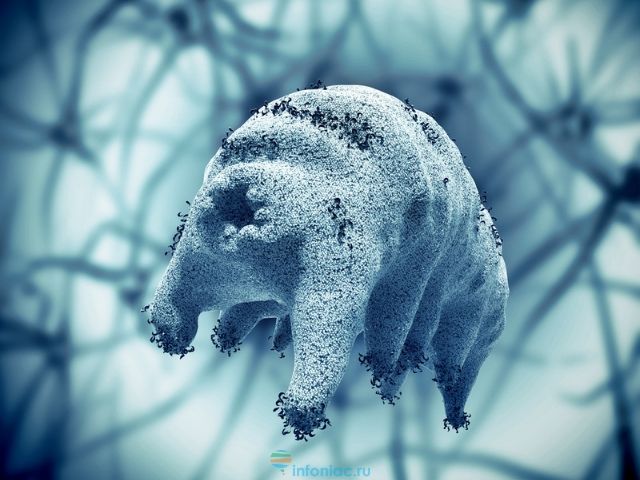
© Giovanni Cancemi/Shutterstock
11. Tardigrades can withstand extreme heat. The scientists placed them in an environment with a temperature of 151°C, in which they survived for several minutes.
12. Scientists froze them to -200 °C, and they continued to exist for several days. They also withstood cooling to -272 °C (1 degree above absolute zero), and they survived for several minutes.
13. Tardigrades are incredibly tough creatures and can withstand more than just changes in temperature. They can survive for about 10 years without food or water. They were found in 120-year-old dried moss with signs of moving legs.
14. In an extremely cold environment, tardigrades manage to reduce their body's water content by 85 percent to 3 percent. This is one of the main survival strategies for this amazing creature, as water expands when frozen.
If they didn't dehydrate themselves under extremely cold conditions, the water in their bodies would expand and tear them apart. When dehydrated, they use a type of sugar called trehalose that prevents shell damage.
15. These creatures can also bring incredible pressure. Most species are able to withstand atmospheric pressure 1200 times higher than normal, and some species can withstand 6,000 times more than normal. This is 6 times more than the pressure that water exerts on the bottom of the Mariana Trench.
16. If you're still not impressed, try exposing the tardigrades to extreme radiation and they'll come out dry. Scientists have found that the lethal dose of gamma rays for tardigrades is 5000 Gy, and the lethal dose of heavy ions is 6200 Gy. For humans, a dose of 5-10 Gy is considered lethal.
17. Researchers have found that tardigrades are able to repair their DNA quite effectively after damage caused by radiation. At the same time, these animals are quite resistant to radiation in both dried and normal states, although when dehydrated they become almost invincible.
Read also: 10 life forms that would survive a nuclear war
18. They can survive in the most unfavorable environment for humans — space. In a 2007 experiment, tardigrades were sent into space dehydrated and exposed to solar radiation for 10 days. They were brought back to Earth and the body's moisture levels were restored. Half an hour later, the tardigrades returned to life, and, moreover, were able to produce healthy offspring in the future.
19. Such impressive abilities of tardigrades are due to their ability to almost completely stop and then restore all metabolic processes in the body. This condition is called cryptobiosis.
Is tardigrades dangerous
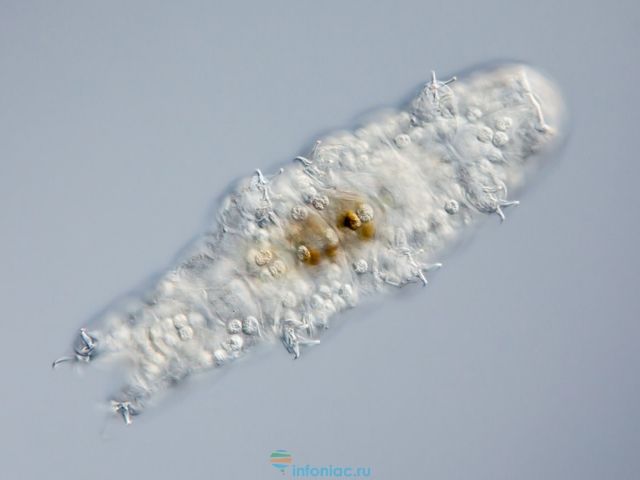
© lebendkulturen.de/shutterstock
20. Although they are incredibly resilient creatures, tardigrades are completely harmless to humans. They are microscopic creatures, and only a few of them feed on other small organisms.
You've probably eaten them a lot of times, as they love to live in water and can end up on lettuce or vegetables we eat. They don't infect you but break down in stomach acid.