
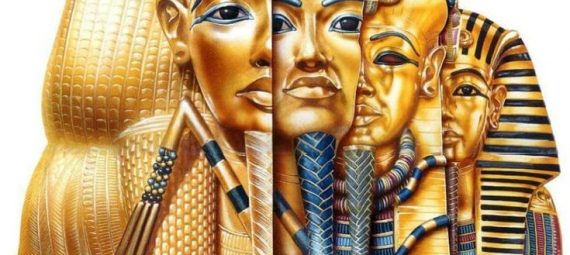
Ancient Egypt, a civilization renowned for its intricate mythology and powerful pharaohs, possessed a rich and complex pantheon of gods and goddesses. These deities, each with their unique attributes, roles, and symbolic representations, profoundly influenced the lives, beliefs, and practices of the Ancient Egyptians. Exploring this pantheon is a journey into the heart of their worldview, a quest to understand their cosmology and their relationship with the divine.
The Ennead of Heliopolis: The Royal Family of Gods
The most prominent group of deities was the Ennead of Heliopolis, a family of nine gods centered around the sun god, Ra. Ra, the creator god and source of all life, held supreme power, his daily journey across the sky representing the cycle of life and death. Other key members of the Ennead included Atum (the creator god, often associated with Ra), Shu (god of air and light), Tefnut (goddess of moisture and rain), Geb (god of earth), Nut (goddess of sky), Osiris (god of the underworld and resurrection), Isis (goddess of magic and motherhood), and Seth (god of chaos and storms). This family dynamic, with its inherent tensions and conflicts, mirrored the complexities of human relationships and the cyclical nature of life.
Osiris, Isis, and Horus: The Myth of Resurrection and Kingship
The myth of Osiris, Isis, and Horus is perhaps the most well-known and influential story in Egyptian mythology. Osiris, the righteous king, was murdered by his jealous brother, Seth, but resurrected by his wife, Isis. Their son, Horus, avenged his father’s death, establishing the cycle of death and rebirth that became central to Egyptian beliefs about the afterlife and the legitimacy of pharaohs. This myth deeply resonated with the Egyptians, reflecting their beliefs in the cyclical nature of life and the promise of resurrection.
Other Important Deities: A Diverse Pantheon
Beyond the Ennead, the Egyptian pantheon included a vast array of other deities, each with their specific domains and attributes. Thoth, the god of writing and wisdom, played a crucial role in maintaining cosmic order. Anubis, the jackal-headed god, guided the dead through the underworld. Bastet, the cat goddess, was associated with protection and fertility. Ptah, the creator god of Memphis, was revered as the divine craftsman. This diverse collection of deities reflected the multifaceted aspects of life, encompassing nature, human emotions, and the mysteries of the universe.
Pharaohs as Divine Intermediaries
The pharaohs, the rulers of Egypt, were considered divine intermediaries between the gods and the people. They were seen as representatives of Horus, embodying the divine right to rule and maintaining Ma’at, the cosmic order. Their tombs, often elaborately decorated with scenes depicting their interactions with the gods, highlight the close connection between the pharaohs and the divine realm. The elaborate rituals surrounding their burial reflect the importance placed upon their role as divinely appointed rulers.
A Legacy of Belief
The pantheon of Ancient Egyptian deities offers a window into the beliefs and worldview of this fascinating civilization. Their intricate mythology, reflected in their art, architecture, and literature, provides a rich tapestry of stories, symbols, and beliefs that continue to fascinate and inspire. Exploring this pantheon is not just a journey through ancient history; it’s a journey into the human heart, a quest to understand the enduring power of belief and the enduring search for meaning in the face of life’s mysteries.