
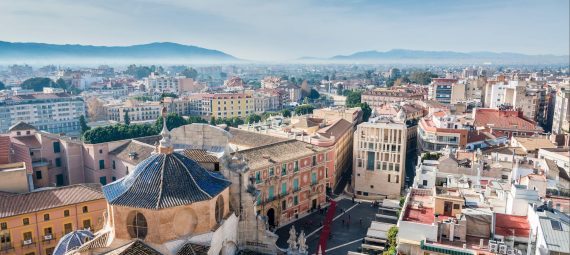
The Cathedral
The Cathedral of the Blessed Virgin Mary is a real extravaganza of architectural styles. The temple has been built and expanded for hundreds of years. The first architects started with Gothic, their successors introduced elements of Renaissance, Baroque and Rococo, and it all ended with neoclassicism. We have not forgotten about the Spanish Plateresco. By the appearance of the structure, you can study the history of architecture of the 13th-19th centuries. At the same time, all its parts are harmoniously combined with each other, it looks luxurious and solemn.
Town Hall
A distinctive feature of the town hall building in almost any Spanish city is its rather modest, but at the same time charming appearance. Murcia was no exception — a small three-storey mansion in a delicate pink shade with a classic Roman portico looks very organically among palm alleys, cypresses and flower beds. Cardinal Belyuga Square is located across the street from the town Hall. It is a favorite place for residents to walk and tourists to make pilgrimages. The maximum number of historical monuments and ancient buildings is concentrated here.
Casino
Several architects worked on the casino building. The main building was designed by F. Bolarin Gomez. The eclectic front facade is the creation of P. Cerdan Martinez and M. Castagnos. The latter also created Moorish-style patios. The casino’s interior is a series of luxurious galleries and halls decorated with rich decor and sculptures. Marble and expensive types of wood were used in the decoration. Today, the premises have been adapted for various cultural events, and the city’s interest clubs are located here.
Flores Square
Small squares in the middle of picturesque neighborhoods are special places where you can feel the unique atmosphere of Spanish cities. The Flower Square in Murcia is surrounded by buildings from the 19th and early 20th centuries. There is a small fountain with an original sculpture in the middle, and everything is filled with cafe tables, speech in different languages can be heard everywhere. Here they drink coffee in the morning, dine in restaurants and gather in bars in the evenings to enjoy socializing and taste delicious dishes of national cuisine.
The Bishop’s Palace
In the 18th century, Bishop Juan Mateo decided that he wanted to admire the facade of the Cathedral of the Blessed Virgin Mary immediately after waking up and before going to bed. Of course, almost immediately the best architects of the kingdom took up the construction of his new residence. But the church hierarch did not live to see the completion of the construction. The image of the Roman Farnese Palace, which Michelangelo himself worked on, was taken as a model by the master. But the Spaniards turned out to have a more elegant building — the classic facade with Doric columns is complemented by complex frescoes on the walls and balconies with wrought-iron grilles.