
Waterfalls of the Blue Nile
The mighty Nile, the main waterway of the African continent, is fed by many large tributaries — among them the Blue Nile, which irrigates the lands of Ethiopia for 800 km. It originates in Lake Tana and after 30 km downstream forms majestic cascades — waterfalls of the Blue Nile.
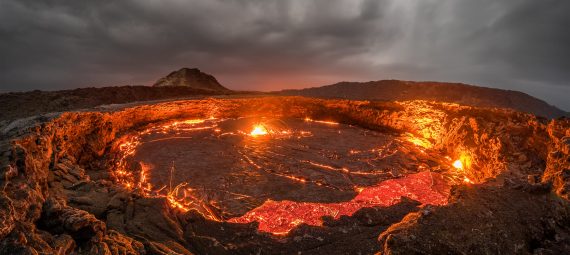
Erta-Ale Volcano
“Smoking Mountain” is how the name of the Erta Ale volcano is translated from Ethiopian, but those who saw it with their own eyes prefer to call it less loftily and more specifically — the road to hell. And this is not an exaggeration at all: Erta Ale is one of the few permanently active volcanoes on the planet.
Ras Dashen Mountain
Thanks to the peaked Ethiopian highlands, Ethiopia is considered the country with the most developed mountainous terrain on the African continent. Ras Dashen Peak (4533 m) — the highest point of the state — is located in the Simien chain, a huge mountain range in the north of the country.
Lake Tana
Lake Tana is the largest freshwater body in Africa and a bastion of biological diversity: many birds, several dozen species of fish and even hippos live here. About 50 rivers flow into the Tanu, and only 4 flow out of it — including the Blue Nile, which carries its waters into the Big Nile.
Temples of Lalibela
Ancient and little-studied, the Ethiopian culture is woven from the scraps of other civilizations: it has been influenced for centuries by Muslim, Jewish and Christian traditions, Egyptians and Greeks, local pagan beliefs and the missions of Europeans.