
 Unbelievable facts
1. Umbilical cord inside a wooden box (Japan)
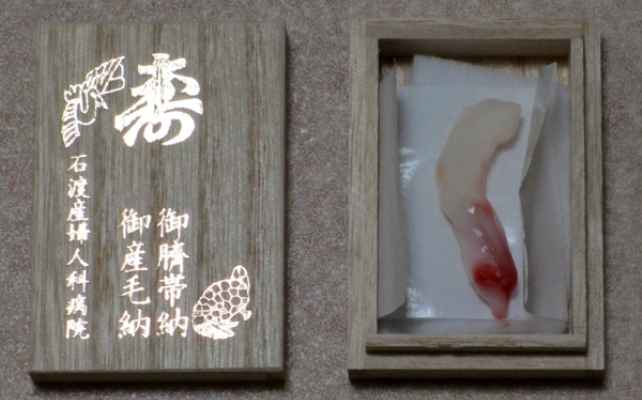
As a rule, when a baby is cut for the first time, parents in most cases leave a lock of his hair as a keepsake, while others store the baby's first shoe. Japanese mothers generally prefer to cherish the umbilical cord.
Hospitals in Japan pack the umbilical cord inside wooden boxes and give it to the mother when she leaves the hospital.
A small doll depicting a sleeping baby in a kimono is sometimes placed inside the box.
It is believed that preserving the umbilical cord in this way is a guarantee of future excellent relations between the child and the mother.
A week after birth, new parents and close relatives hold a naming ceremony for the baby (Oshichiya), during which the baby receives its official name in front of the face home altar.
2. Toddler's street sleep (Denmark and Sweden)
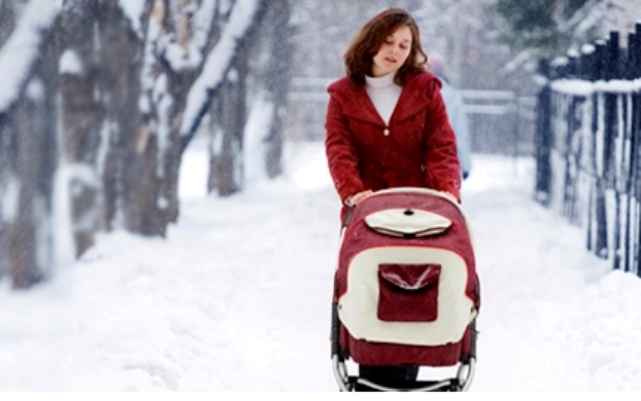
Would you leave your newborn baby outside in the cold while he sleeps in the afternoon? Most “northern” parents will answer in the affirmative without hesitation.
For them, this is part of everyday life because of the belief that cold air actually helps children sleep and eat well.
Danish and Swedish babies spend their afternoon naps on the balcony or just outside, while their mothers and fathers go shopping and cafés enjoying their free time.
In addition, most kindergartens in Sweden also leave children outside while they sleep despite the low temperatures (-5 degrees Celsius).
Behind this method is the theory that sleeping outdoors, both in winter and summer, helps children to strengthen their immunity, so they have a much lower chance of catching a cold.
Parents believe that having their child in the same room with 30 children all day is no good at all.
The Children's National Health Council also recommends this practice. Some companies even make special alarm clocks for parents that let them know when the baby wakes up to pick it up.
Baby gifts
3. Every newborn receives a “maternity package” from the government (Finland)
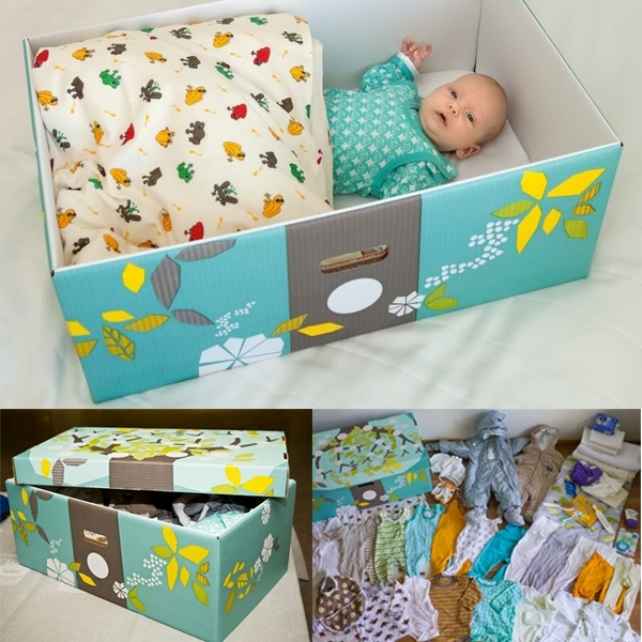
In Finland, babies are “born with a box”.
For 75 years now, women preparing to become mothers have been receiving a “package” from the state. The package is a starter set of clothes, diapers and toys.
The mother has a choice between a package and a cash subsidy of 140 euros, but in 95 percent of cases, women choose the “package” because its contents cost much more.
Originally designed for low-income families, the “maternity package” has been available to any woman giving birth since 1949. Since then, the package has become one of the main “products” for newborns and a sign that, regardless of their future, all Finnish children get an equal start in life.
4. Place the newborn in a large sieve and shake it to help the baby get used to the vicissitudes of life (Egypt)
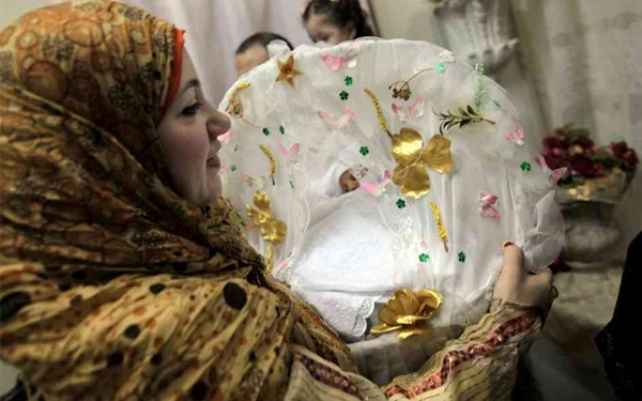
In modern Egypt, survival and number seven are inextricably linked. Therefore, on the seventh day of a baby's life, his existence is officially recognized by the outside world in a ceremony after receiving the name Sebooh.
According to tradition, a mother puts a child dressed in a white coat in a large sieve and shakes it gently to help the newborn get used to the vagaries of fate. After that, the baby is placed on a blanket spread out on the floor with a knife on his chest, whose role is to ward off evil spirits.
Read also: 10 things you need to know about your baby's sleep
Meanwhile, ceremony guests throw grain, gold and gifts around the baby. All this symbolizes the happiness and wealth that a child wants. The mother stands seven steps away from her child, again to ward off evil spirits, and listens to the singing of special people who urge the baby to obey and obey her mother.
This is followed by a procession of fire and incense led by the mother. Singing children and guests hold lit candles, blessing the house and its inhabitants.
At the Sebooh ceremony, the baby's name is also chosen with candles. Several candles are lit, each of which is given a potential name for the child. The baby will receive the name with which the candle will burn the longest.
Birthdays customs
5. The baby is placed on the floor surrounded by symbolic elements to discover his future (Armenia)
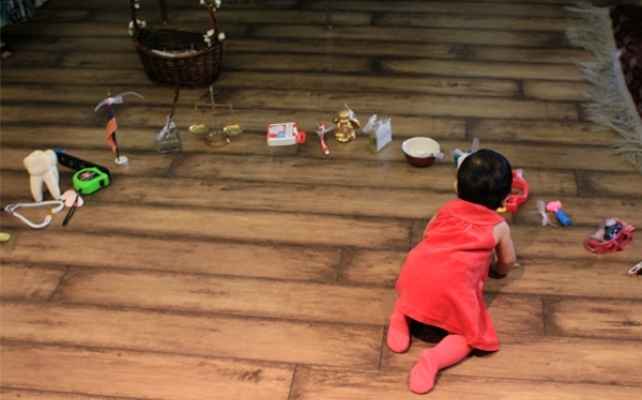
When a child's first tooth grows, Armenian parents celebrate a ceremony called Agra Hadig. They put the child on the floor, and around him they place various symbolic elements, such as a tape measure, a stethoscope, a spatula, a book, and others. Then they ask him to choose something from the proposed one.
Depending on what the baby chooses, this will symbolize his future. For example, if a boy picks up a tape measure, it will mean that he will become an engineer or architect in the future. Of course, only time will tell whether such a prophecy is true or not.
6. New parents are given red colored eggs as a symbol of happiness and new life (China)
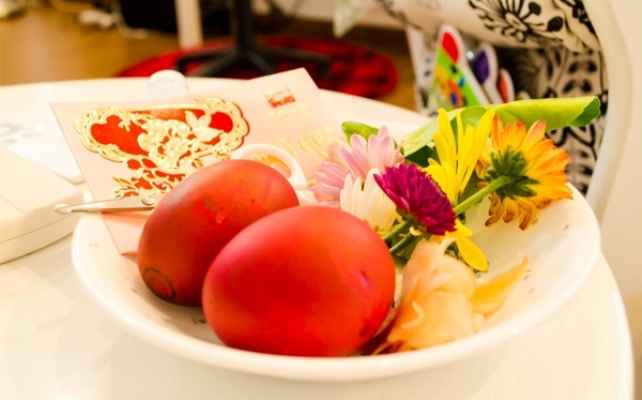
In Chinese families, when the baby is one month old, the Full Moon ceremony is held. This is the first important event in a little person's life.
On the morning of the baby's 30th day, relatives and friends gather together to give gifts and blessings to the newborn. The child's parents also give gifts to their relatives and friends.
The types of gifts vary from time to time, but red-colored eggs are usually the most popular gift, probably because in Chinese culture, eggs are a constant symbol changing life and its fluidity.
Their round shape is a sign of a harmonious and happy life, and red is the color of happiness.
During celebrations, grandparents tend to give their grandson gold or silver to show their deep love. Of course, parents and newborns also receive “modern” gifts, such as children's clothes, toys, books, and gift certificates.
At the same time, an equally common gift is money wrapped in red paper. In other words, everything is the same as in the West and Europe, only in a month!
The birth of a baby in different countries
7. The placenta and umbilical cord must be buried in a special place where the tree is then planted (Jamaica)
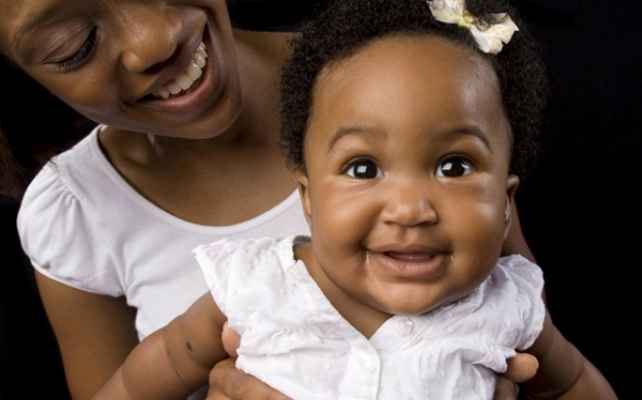
Surely you have repeatedly heard the phrase that each of us should plant a tree, build a house/write a book and grow/give birth to a son (varies by culture). In Jamaica, it seems that parents will only have to write a book because they have already done the rest.
According to Jamaican tradition, after a woman gives birth, the placenta and umbilical cord must be buried in a specially chosen place, where a tree is then planted. The tree is chosen by parents, godparents or other relatives and friends.
Read also: Babies begin to understand sooner than we think
The tree is a pedagogical tool that teaches children to take responsibility, because it symbolizes the beginning of a life that needs to be taken care of.
This tradition was born from a Jamaican expression that says “home is where your umbilical cord is buried”. This shows a spiritual attachment to the place where each person comes from.
8. Babies' feet should not touch the floor because newborns are considered divine beings (Bali)
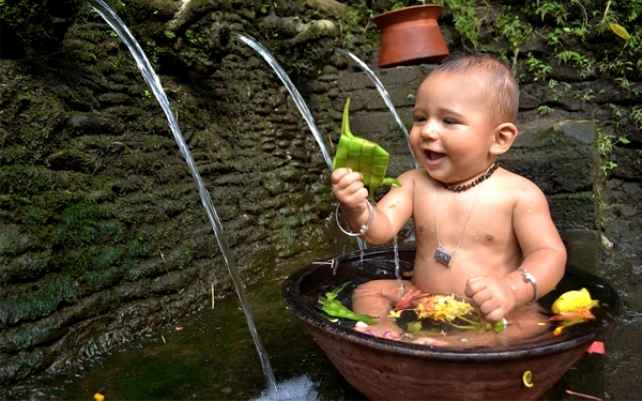
While some parents around the world feel comfortable leaving their baby crawling on the floor, Balinese babies' feet do not touch the ground until they are 210 days old, because A child is considered to be a divine being who descended from heaven.
When a baby first steps on the floor, it means that he has become a full-fledged person.
What to give to a baby
9. Put money in your child's hands for a prosperous future (Trinidad and Tobago)

In Trinidad and Tobago, when people visit a newborn, they tend to put money in the baby's pens to bless the baby for a successful life.
There is also a rule in this country that some parents do not allow guests to visit them after 6 pm, because it is believed that the evening dew that guests bring with them will cause illness a child.
Traditions for newborns
10. A newborn gets 20 or more names (Nigeria)
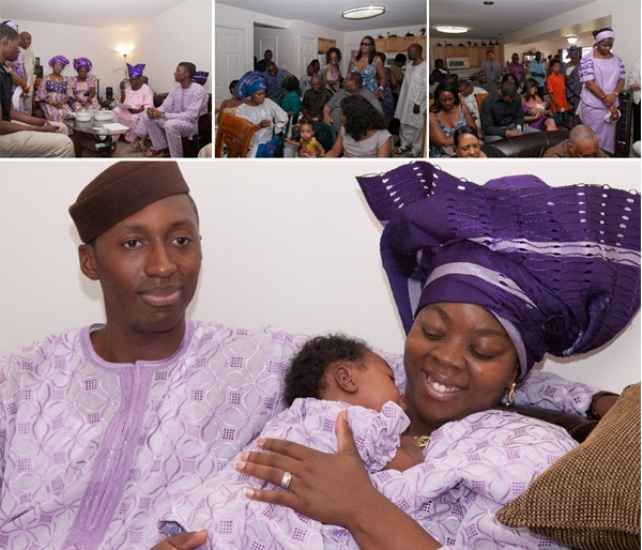
On the seventh day after the birth of a girl, or on the ninth day after the birth of a boy, the child is blessed with special elements that the mother gives him through her lips.
First, his mother kisses him with her lips soaked in water so that the baby has no enemies, then palm oil is on his lips to make his life smooth and easy, bitter Cola (a type of nut eaten in Nigeria) so that life is long, as well as pepper and salt so that life is sweet, full of excitement and happiness.
After that, the baby is chosen a name. In addition to the last name, the newborn receives several names. One of the names describes the circumstances of birth, for example, the name Idowu means “child born after twins”.
Another example is when a middle-aged woman dies giving birth to her daughter, in which case the baby will be called Yetunde, literally “mother is back”.
Also read: Surprising facts you didn't know about babies
Parents often give their child a nickname that says they pray for their offspring. For example, Ayoke means “one who is blessed” and Titilayo means “eternal happiness”.
After parents announce the names they have given the child, relatives can also name the baby if they wish. But before giving a name, they must make a “cash contribution” to the baby's basket.
After everyone is given the opportunity to name the baby, the money is collected and transferred to parents who open an account for him. Thus, after the ceremony is over, a baby can have more than twenty names!
The ceremony ends with prayers, after which everyone is invited to the table.
11. Mother prepares souvenirs for every person who visits a baby (Brazil)
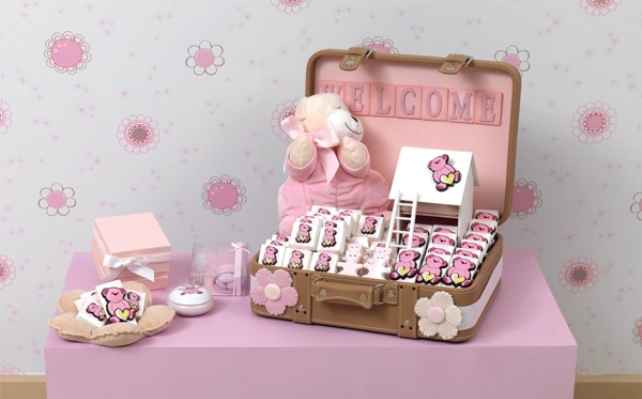
In Brazil, an expectant mother prepares a basket with souvenirs that she gives to every person who comes to visit her and her baby at the hospital.
As a rule, this is a small “treat” in the form of candy, a fridge magnet, a notebook, a sachet, and even tiny bottles of perfume that are chosen by the mother in advance.
So she thanks the man for coming.
12. Hot stone massage and regular full body peeling to restore the body to normal after childbirth (Malaysia)
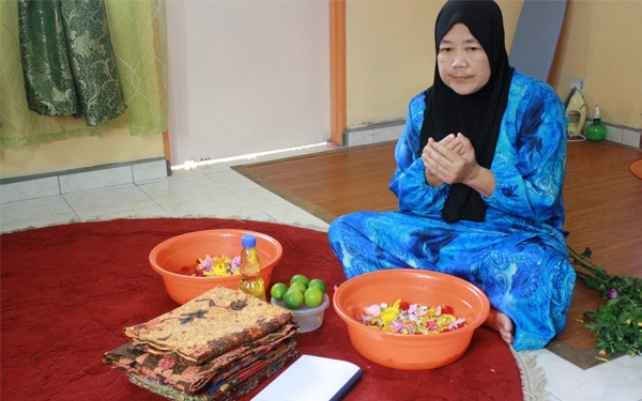
After reading this, every new mother will want to go to Malaysia for these procedures. So this is what this Malaysian tradition is all about.
After giving birth, a woman is transferred to a special clinic, where she stays an average of 44 days, during which she regains her health and feminine form.
She is regularly massaged with hot stones to cleanse her uterus, and her whole body is peeled to smooth out changes after childbirth.
Mothers are not allowed to lift weights or do anything other than feed their baby. All household chores are transferred to the husband or relatives.